
Healthcare Flooring in Southern California: What's Different Here
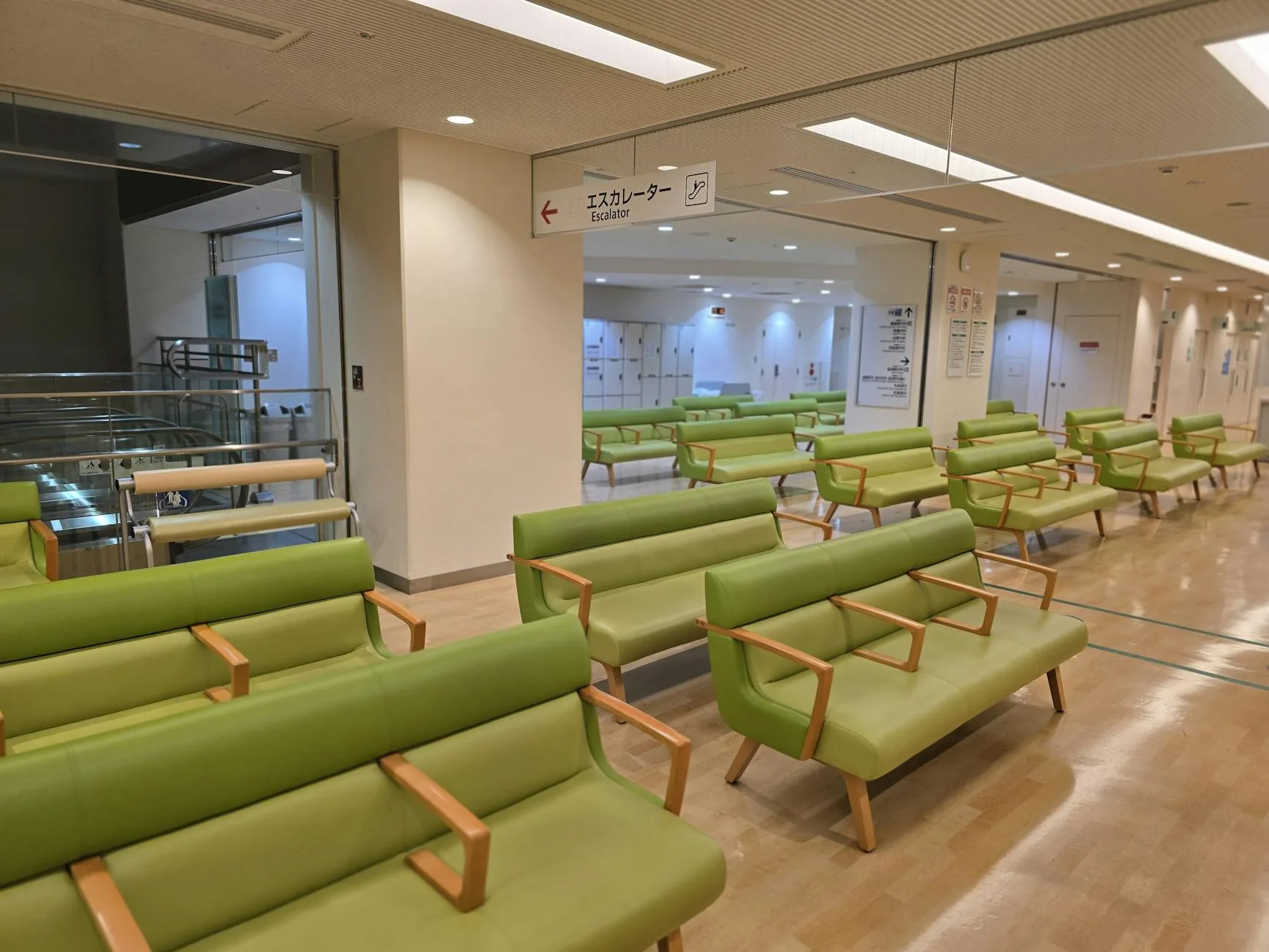
Healthcare flooring is a different trade than the rest of commercial flooring. A retail rollout or a hospitality buildout lives or dies on aesthetics, schedule, and price. A healthcare project lives or dies on whether the materials submit, the barriers hold, the seams are sealed correctly, and the work happens without putting an immunocompromised patient at risk twenty feet from your dust line. The technical bar is higher and the consequence of getting it wrong is worse.
Southern California adds its own layer on top of that. The regulatory environment is its own animal, the building stock has quirks you don't see in every market, and the volume of outpatient and TI work across OC and LA County means there's a steady drumbeat of projects with overlapping schedules and overlapping infection-control zones. We've worked in this market for years through three generations of the family, and the patterns below are what we wish more facility managers and GCs new to SoCal healthcare understood before they put a job out to bid.
The SoCal healthcare market: who's building, and where
The named systems drive most of the activity. Hoag Memorial Hospital Presbyterian on the Newport Beach campus and its outpatient footprint across Orange County. MemorialCare's Long Beach Memorial and Saddleback Medical. UCI Health expanding through Irvine and Orange. Cedars-Sinai and its affiliated network up through the LA basin. Kaiser Permanente operating at near-continuous TI volume across both counties. Providence on the LA/OC border. CHOC and St. Joseph in Orange. Mission Hospital in Mission Viejo. The list is longer than that, but those are the names that show up on plan-room cover sheets month after month.
What's behind the volume isn't just new towers — those happen, but they're rare and they're expensive. The steady work is outpatient buildouts: medical office buildings, ambulatory surgery centers, infusion suites, imaging centers, dialysis, behavioral health, and the constant rotation of TI projects inside existing hospitals as service lines reorganize. The Irvine Spectrum medical office cluster alone has a TI churn rate that keeps multiple crews busy year-round. Newport Beach, Long Beach, Mission Viejo, and the Orange/Santa Ana medical corridor all run similar patterns.
The implication for a contractor: a SoCal healthcare flooring practice isn't really one practice. It's a stack of recurring jobs of varying sizes, often inside facilities that can't fully close, on schedules driven by service-line operations more than by construction logic. The crews that do this well treat it as a specialty, not a sideline.
HCAI compliance — and why the renamed OSHPD still matters every day
The agency that regulates healthcare construction in California was renamed from OSHPD to HCAI (the Department of Health Care Access and Information) in 2021. The acronym changed; the workload didn't. For any project on a licensed acute-care or skilled-nursing footprint — and for plenty of outpatient work touching those facilities — HCAI review controls what materials you can install and what documentation you have to produce before the inspector signs off.
For flooring specifically, that means the material submittal package is heavier than on a commercial-grade interiors job. Fire-rating documentation — ASTM E648 Class I for radiant flux in corridors and exits, ASTM E662 for smoke density — has to be on file for every product going down. Slip-resistance results under ANSI A326.3 (the wet DCOF method) need to be current and need to match the substitution being approved. Adhesive VOC certifications, transition strip profiles, integral cove heights, and seam treatment methods all live in that package. The realistic submittal timeline on a HCAI project is weeks, not days, and on a substitution it can be longer.
The schedule impact is the part GCs new to this work tend to underestimate. A material delay on a healthcare project isn't a procurement problem you can solve by switching suppliers — the new supplier has to come through the same submittal review. We've watched projects lose a month because someone assumed a "comparable" sheet vinyl could swap in late. The fix is to lock the flooring submittal early, keep one approved alternate in the package, and protect the lead times like they're long-lead mechanical equipment. They are.
ASHE protocols and ICRA — the part most non-healthcare crews get wrong
The American Society for Healthcare Engineering publishes the protocols that govern construction inside operating facilities, and the Infection Control Risk Assessment process — ICRA — is where flooring crews most often fail their first healthcare job. ICRA is not a form you sign once. It's a live constraint that runs the entire duration of the work, and the class assigned to your scope determines the barrier system, the air handling, the PPE, and the path of travel from the work zone to the dumpster.
Most flooring scopes inside an operating facility land at Class III or Class IV. Class III means full-height barriers — typically poly over a stud frame, sealed at penetrations — combined with negative air pressure inside the containment, HEPA filtration of exhausted air, and dedicated egress that doesn't cross patient zones. Class IV adds anteroom airlocks, more rigorous wipe-down and HEPA vacuuming protocols, and a chain-of-custody on dust and debris removal that gets logged. The infection preventionist on the hospital side signs off on the barrier before you can start, walks it during the work, and signs off again at clearance.
The reason flooring crews stumble: demolition of old flooring is a dust event. Pulling resilient sheet, grinding adhesive residue off slab, and prepping substrate are all activities that, done with the wrong equipment, release particulate that infection-control protocols will not tolerate. We run HEPA-equipped grinders, HEPA vacuums tied directly to dust shrouds, and a negative-pressure containment that gets monitored continuously, not just at startup. We also stage the demo so the dustiest passes happen during the lowest-occupancy windows the operations team can give us. Crews that show up with conventional grinders and shop vacs do not pass ICRA walk-throughs, and they don't get invited back.
Material selection — heat-welded sheet vinyl is the default for a reason
The conversation about healthcare flooring usually starts with materials, and there's a reason heat-welded homogeneous sheet vinyl with integral cove base remains the workhorse spec for clinical environments. The seam is welded — not glued, not sealed with a topical caulk — so the floor reads as a continuous monolithic surface from the field, up the wall, to the top of the cove. There are no joints where fluids, contaminants, or cleaning chemistry can penetrate. Janitorial can flood the floor and run a wet vac without compromising the assembly. For acute care, infusion, imaging wet rooms, and most clinical zones, that's the standard, and the alternatives have to justify themselves.
Sheet vinyl isn't the only answer though. Slip-rated commercial porcelain tile shows up in cafeterias, lobbies with heavy water tracking from outdoor weather (yes, it rains enough in OC to matter), and back-of-house wet areas where the wear profile is severe. Polished and burnished concrete with appropriate sealers shows up in some basement-of-house and lower-acuity admin space. Sheet rubber gets specified in PT and behavioral health for impact and acoustics. Each has a legitimate use case, and the spec should match the use, not default to whatever the design team used last time.
The category that requires the most caution is luxury vinyl plank and tile. LVT has improved dramatically and has real applications in lobbies, corridors, and lower-acuity outpatient zones — but the seamed assembly limits it in any room that gets wet-cleaned aggressively, and the click-lock products are a non-starter anywhere that infection control is a live concern. Glue-down LVT with chemically welded seams is a defensible spec in the right room. The wrong room — anywhere with regular fluid exposure — and you've installed a problem that shows up at the first joint failure.
Antimicrobial-additive flooring deserves its own caveat. The marketing on it is heavy, and the clinical evidence that the additive meaningfully changes infection rates is thin. We treat antimicrobial claims as a tiebreaker between two otherwise equivalent products, not as a reason to spec a weaker assembly. The seam quality, slip rating, and cleanability of the base material matter far more.
Biophilic patterns — wood-look planks, organic stone-look sheet goods, soft natural color fields — are trending hard in OC waiting areas and outpatient lobbies, and the better products carry it off without compromising the technical spec. Hoag's outpatient work in particular has set a high bar for clinical environments that don't read as clinical. The trick is choosing patterned products that meet the wet DCOF and seam requirements first and selecting the visual second.
Slip resistance — the spec everyone references and few people verify
The DCOF (dynamic coefficient of friction) baseline for most commercial floor surfaces under ANSI A326.3 is 0.42, measured wet. For general healthcare circulation, lobbies, and corridors, that's the floor. For clinical wet zones — surgical suites, decontamination, central sterile, hydrotherapy, kitchens, certain imaging suites — the recommended threshold steps up, often to 0.60 or higher depending on the room's risk profile and the facility's own standards.
The number on a product spec sheet is a starting point, not a guarantee. DCOF degrades over the product's life as the surface wears, finishes are stripped, and cleaning chemistry interacts with the substrate. A clean DCOF result on a new sheet of material doesn't mean the installed floor will hold that number two years in. The slip rating conversation needs to include the maintenance protocol — what chemistry, what equipment, what frequency — because a misaligned cleaning program will degrade slip performance faster than wear will.
We push back on substitution requests that quietly drop the DCOF below the spec'd minimum, even when the visual is identical. It's the kind of substitution that's invisible at install and becomes a problem at the first slip-and-fall claim three years later.
Phasing logic for active facilities — the hardest part of the job
A new ground-up hospital is a relatively forgiving flooring job. The building is empty, the schedule is the GC's to shape, and the floor goes in when it goes in. The work that defines a SoCal healthcare flooring practice is the opposite: TI inside facilities that can't close, on units that have to keep operating, with patients and staff fifty feet from your barrier wall.
Phasing for active facilities has a few non-negotiables. Patient zone protection is the first — corridors and doorways inside the active care environment must remain clean, dry, and unobstructed, regardless of what's happening on the other side of your barrier. Swing space gets identified early so units can shuffle without disrupting service lines. Off-hours work is the default for any scope that generates noise or odor in occupied wings. Weekend phase-cut windows — Friday evening through Sunday afternoon — are the workhorse slots for floor demo, prep, and install in spaces that can't go down during the week.
The constraint that surprises GCs new to healthcare: VOC and odor management. Flooring adhesives, even low-VOC formulations, produce odor that travels through return-air paths in ways that won't show up on a drawing. We've shifted entire installs to lower-VOC adhesive systems on facilities where the HVAC topology made conventional product unworkable. That decision needs to happen at submittal, not at install. By the time the smell shows up on the patient floor, the call from the operations director is already incoming.
The other constraint: dust and debris egress. The path from your work zone to the loading dock has to be planned, and on a large medical campus that path can be longer and more constrained than the work zone itself. We run carts that seal, we wipe and HEPA-vacuum cart wheels at every barrier transition, and we don't move waste during high-traffic operational windows. That's how you stay invited.
SoCal-specific building stock — post-tensioned slabs and seismic detailing
A lot of the newer outpatient construction across OC — and a meaningful share of the medical office buildings in Irvine, Newport Beach, Costa Mesa, and the Mission Viejo medical corridor — is built on post-tensioned slabs. PT slabs change the substrate prep conversation in two specific ways.
First, you can't core or anchor without knowing where the tendons run. Coring through a PT cable is expensive at best and structurally dangerous at worst. Any flooring scope that involves transitions, embedded thresholds, or anchored equipment near the floor needs a GPR scan and a documented tendon map before the work starts. We've watched crews skip that step on what looked like simple transitions and end up with a stop-work order before lunch.
Second, PT slab surfaces tend to be flatter than conventional slab on grade, but they also tend to have surface treatments and curing compounds that interfere with adhesive bond. The mechanical prep — shotblast or grind to a CSP appropriate to the adhesive system — has to be specified and verified before flooring goes down. We test bond on the prepped substrate, every floor, every time, before we lay material. The cost of that test is negligible. The cost of a delaminated floor in a six-month-old infusion suite is not.
Seismic detailing is the other piece. California's seismic code shapes how expansion and isolation joints get detailed across hospital and outpatient floors, and the flooring system has to accommodate movement at those joints without telegraphing damage. Pre-formed seismic joint covers with appropriate movement ranges, properly integrated with the field flooring on both sides, are standard. Trying to bridge a seismic joint with continuous sheet vinyl is a failure waiting to happen — the joint will move, the flooring will tear, and the moisture barrier will be compromised in a clinical environment.
Notable submarkets across OC and LA County
Each of the major submarkets has its own character, and a contractor working SoCal healthcare ends up developing a feel for them.
The Irvine Spectrum medical office cluster runs lean and fast. Class A medical office buildings, fast-turning TI cycles, and design teams that push for aesthetic-forward biophilic specs without sacrificing the clinical baseline. Schedules are tight and the bar for finish quality is high.
Newport Beach — Hoag's main campus and the surrounding outpatient footprint — is a long-tenured environment where the facilities team has seen everything. The standards are exacting, the institutional memory is long, and the contractors who work there repeatedly are the ones who don't cut corners on barriers or substitution submittals.
Long Beach — anchored by MemorialCare's Long Beach Memorial campus — runs a high-volume TI cadence with the kind of operational pressure that comes with a large urban hospital. Off-hours and weekend windows are the norm.
Mission Viejo (Mission Hospital) and the South County medical corridor run a bit calmer in cadence but with the same technical standards. The drive times in and out of that submarket are a real consideration for crew scheduling.
Orange (St. Joseph and CHOC, Children's Hospital of Orange County) carries the additional layer of pediatric infection-control sensitivity at CHOC. The barrier standards and protocols at a pediatric facility are not noticeably different on paper, but the operational tolerance for any breach is essentially zero.
Los Angeles County — Cedars-Sinai, Kaiser, Providence, UCLA Health — runs the same playbook at greater scale and with longer commute logistics. Crews working LA County healthcare typically stage closer to the project than crews working OC.
What to ask a flooring contractor before bid on a SoCal healthcare project
If you're a facility manager or a GC putting a SoCal healthcare flooring scope out to bid, the questions that surface real capability versus paper credentials are specific. We'd ask these:
Walk me through your last three HCAI submittal packages — what was approved, what was substituted, and how long the cycle took. Anyone who can't answer this hasn't done the work.
Show me your ICRA Class III or IV barrier setup, with photos of recent work. Look for full-height sealed barriers, anteroom configurations where required, and HEPA-equipped negative air machines — not poly draped over a sawhorse.
What's your HEPA-equipped demo and prep equipment, and which crew members are trained on it? If the answer is vague, the crew will improvise on-site, which is exactly where ICRA breaches happen.
How do you handle PT slab anchoring and coring? The right answer involves GPR scanning, tendon mapping, and a documented protocol — not "we're careful."
What's your wet DCOF verification process? The right answer is that they hold installed product to ANSI A326.3 results and they push back on substitutions that quietly lower the rating.
Who's your infection-preventionist contact on your most recent active-facility job? A contractor who's done the work knows the IP team at their last hospital by name, because that's the relationship that keeps them on site.
What's your weekend and off-hours crew availability for phase-cut windows? Healthcare TI runs on those windows, and a contractor that can't field a Saturday-night demo crew on short notice will miss schedules.
How do you handle VOC and odor management on installs adjacent to occupied patient zones? The good answer involves adhesive selection, install timing, and HVAC coordination with the facility — not just a low-VOC product spec sheet.
The questions above are how we'd evaluate someone bidding our own facility if we were the FM. The contractors who answer them with specifics — names, sequences, product systems, recent examples — are the ones who've earned the work.
Closing thoughts
SoCal healthcare is a specialty market with its own regulatory environment, its own building stock quirks, and its own operational rhythm. The contractors who do it well treat it as a long-term practice — they invest in the equipment, they build relationships with HCAI reviewers and hospital infection-preventionists, and they get the technical details right even when nobody on the GC side is watching closely. That investment is what keeps a facility manager's life simple on the project that matters most.
We've built Coast Floors' healthcare practice around exactly those fundamentals across three generations of the family in this trade. If you're spec'ing a project in Orange County, LA County, or anywhere between, and you want a flooring partner who treats the submittal package, the barrier wall, and the substrate prep with the same seriousness as the finish work, we'd welcome the conversation.
Quick answers.
What's the difference between HCAI and OSHPD?
HCAI (Department of Health Care Access and Information) is the renamed agency that took over OSHPD's regulatory functions in 2021. The acronym changed but the construction review process for licensed healthcare facilities — including flooring material submittals, fire ratings, and slip-resistance documentation — is essentially the same in practice.
What DCOF rating is required for healthcare flooring in California?
Under ANSI A326.3 (wet method), the baseline is DCOF ≥0.42 for most healthcare circulation, corridors, and lobbies. Clinical wet zones — surgical suites, decontamination, central sterile, hydrotherapy, kitchens — typically require ≥0.60 or higher, depending on the room's risk profile and the facility's own internal standards.
Why is heat-welded sheet vinyl the standard for clinical floors?
Heat-welded homogeneous sheet vinyl with integral cove base produces a continuous monolithic surface from the field up the wall, with no glued or caulked joints where fluids and contaminants can penetrate. Janitorial can wet-clean aggressively without compromising the assembly, which is why it remains the default spec for acute care and most clinical zones.
What is ICRA and how does it affect flooring scope?
ICRA (Infection Control Risk Assessment) is the live protocol that governs construction inside operating healthcare facilities. For flooring scopes, it typically requires Class III or Class IV barriers — full-height sealed containment, negative air pressure, HEPA filtration during demo and prep, dedicated egress paths, and sign-off from the facility's infection preventionist before, during, and after the work.
Can luxury vinyl plank be used in healthcare facilities?
Glue-down LVT with chemically welded seams has legitimate applications in lobbies, corridors, and lower-acuity outpatient zones. Click-lock LVT is a non-starter anywhere infection control is a live concern, and seamed assemblies of any kind are limited in rooms that get wet-cleaned aggressively. The room's use case has to drive the spec, not the other way around.
Shawn is the third-generation owner of Coast Floors. He's spent 15+ years in the commercial flooring industry, taking over operations from his father in 2018. Shawn leads project planning and client relationships, with a focus on healthcare, hospitality, and high-end retail work — the projects where flooring spec and installation precision matter most.

Why Commercial Floors Fail Early: 5 Causes We See on Site Visits
Why commercial flooring fails early, from a 3rd-generation crew. Moisture, prep, spec, joints, and chemistry — the trade-level diagnostics we run on site.
Read article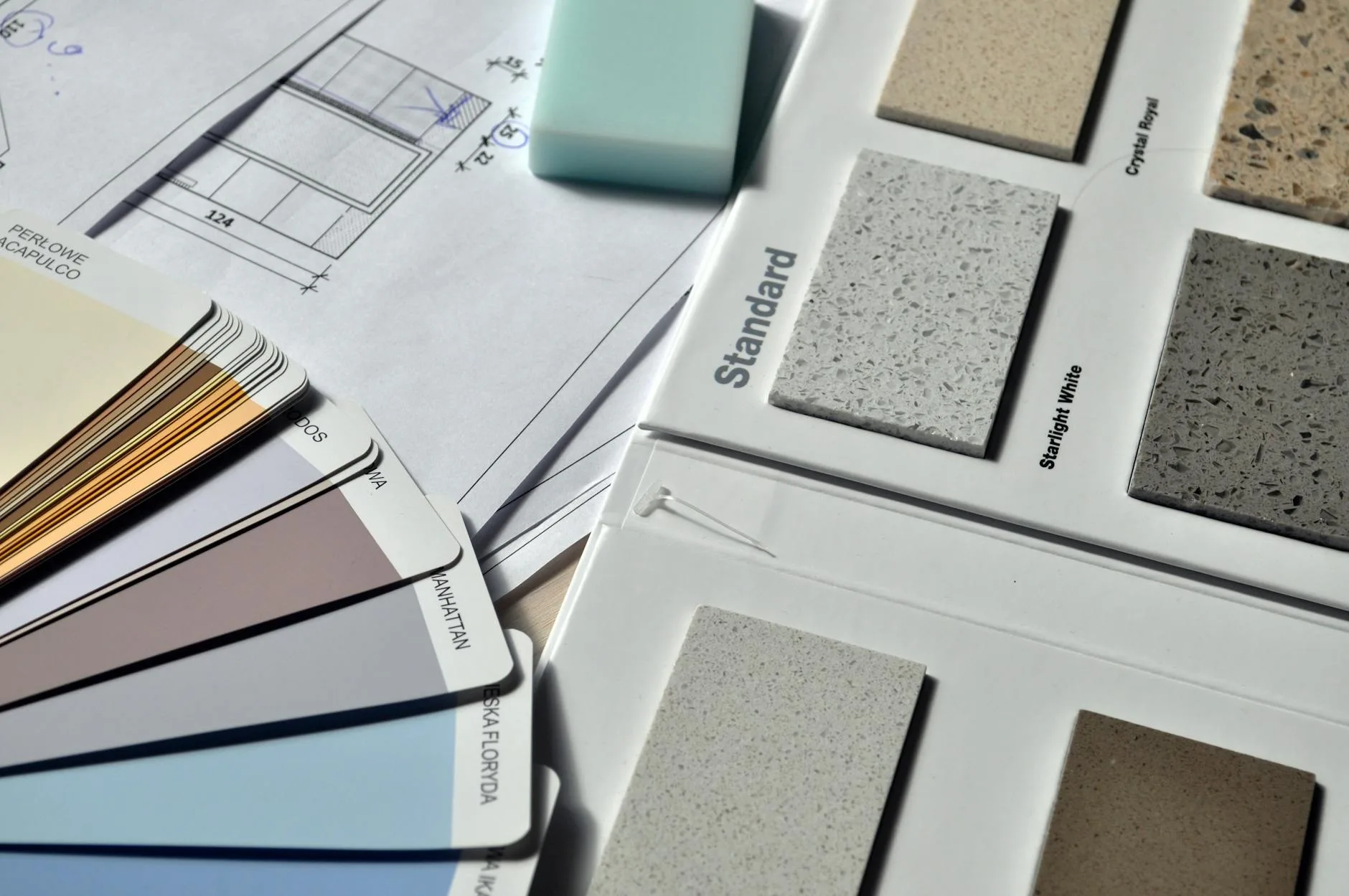
Commercial Flooring Materials Guide: What Goes Where, and Why
A senior installer's commercial flooring materials comparison — sheet vinyl, LVT, porcelain, polished concrete, terrazzo, carpet tile, epoxy. What goes where.
Read article
How to Read a Commercial Flooring Bid (And What Variance Actually Means)
A 3rd-gen commercial flooring contractor explains how to compare a commercial flooring bid apples-to-apples — scope, allowances, alternates, and red flags.
Read article