
Why Commercial Floors Fail Early: 5 Causes We See on Site Visits
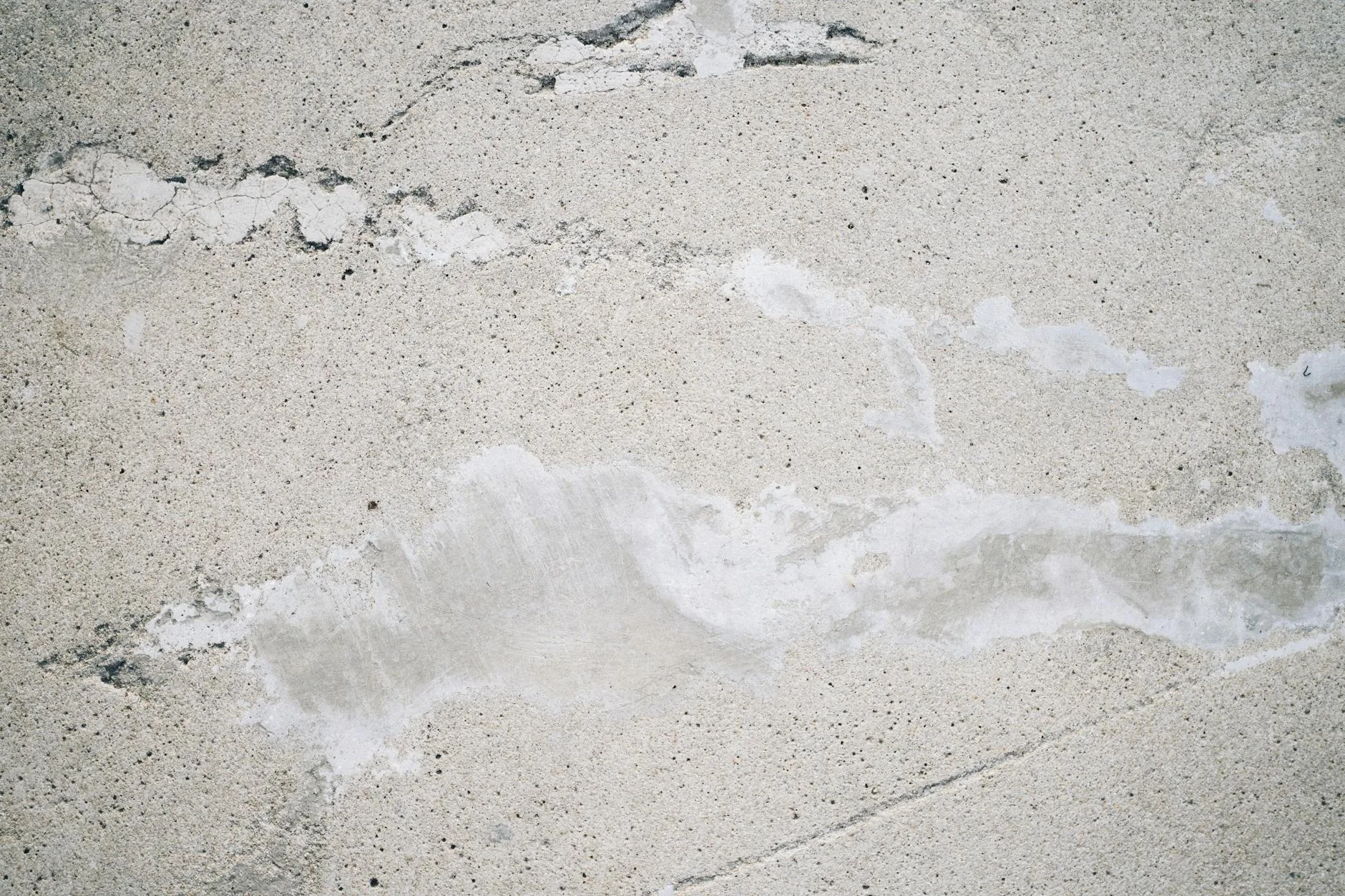
We get called out to assess failing commercial floors on a pretty regular basis. Sometimes it's a year-old dealership showroom with adhesive bleeding through the seams. Sometimes it's a healthcare corridor that started cupping six months after handover. Sometimes it's a brand-new retail buildout where the porcelain is already cracking in straight lines across a 60-foot run.
After three generations of doing this work in California, the pattern is consistent: most commercial floor failures aren't material defects. The product on the truck is fine. The failure was baked in by a decision made weeks or months before the flooring ever shipped — a missed moisture test, a substrate the GC called "broom-clean," a spec that put the wrong material into the wrong use case, a missing expansion joint, or a maintenance program running the wrong chemistry. Below are the five failure modes we see most often, what they look like on a site walk, how we diagnose them, and what it usually takes to make them go away.
1. Moisture migration — the slab is winning
This is the most common failure we get called in on, and it's almost always preventable. Concrete slabs release moisture for a long time. New slabs release a lot of it. Existing slabs in humid environments, slabs below grade, and post-tensioned slabs all carry elevated risk because the moisture has nowhere to go except up — into whatever adhesive, underlayment, and finish floor sits on top of it.
Failure signature. Adhesive failure under sheet vinyl or LVT — you can usually peel a corner up and the bond is gone, replaced by a milky or amber residue. Bubbling and tenting in sheet goods. Cupping and edge curl on LVT planks. A chalky white efflorescence at seams. In bad cases, an alkaline burn at the surface — the pH at the slab face is sitting at 11 or 12 and it's chemically attacking the adhesive.
Diagnostic. We run two tests. ASTM F2170 measures in-situ relative humidity by drilling probes into the slab at 40% of slab depth and letting them equilibrate. That number tells you what the slab will actually equilibrate to under a sealed finish floor — it's the test the manufacturers care about. ASTM F1869 (calcium chloride / MVER) is a surface emission test; it's useful as a screening tool but it can be fooled by ambient humidity and HVAC. We also test surface pH with a wet litmus strip. If RH is over the manufacturer's tolerance (often 75% or 80% depending on product) or surface pH is above 9, we don't install. We mitigate.
Why post-tensioned slabs and below-grade slabs are higher risk. Post-tensioned slabs hold moisture longer because they're typically thicker and the cables limit how much you can drill for probes — testing has to be planned. Below-grade slabs have soil-side moisture pushing up through capillary action indefinitely, and the original vapor barrier under the slab is often unverifiable or compromised. On either, we assume mitigation is needed until tested otherwise.
Cost-of-rework framing. When a moisture failure goes the full distance, the scope categories are: full demo of the finish floor, full adhesive removal back to clean concrete (often shot-blasting), moisture mitigation (a topical epoxy moisture barrier and a portland-based skim), and then a full reinstall. You're paying for the floor twice plus the mitigation that should have happened the first time.
Prevention. Test before you spec. On any commercial interiors project where the slab is new, below grade, or unknown vintage, F2170 should be a line item, not an afterthought. If RH is high, mitigate at install — it's a fraction of the cost of remediation a year later.
2. Inadequate substrate prep — the surface underneath isn't what the material expects
Every resilient flooring manufacturer publishes a tolerance for substrate flatness and surface profile. ASTM F710 is the standard for resilient flooring substrates and the one most spec sheets reference. The real-world number most manufacturers ask for is 3/16" in 10 feet for sheet vinyl and LVT, tighter for some products. Tile has its own ANSI tolerances. Almost nobody actually meets these out of the box from the GC.
Failure signature. Crack telegraphing through resilient — a hairline in the slab shows up as a ridge in the LVT three months in. Lippage in tile — adjacent tiles sitting at different heights, which the installer can hide on day one but which traffic exposes within a year, especially with large-format tile. Peaking and lifting at heat-welded vinyl seams. Hollow spots under tile that crack when a pallet jack rolls over them. Premature wear patterns at high points the finish floor never fully bonded to.
Diagnostic. We walk the slab with a 10-foot straightedge and a feeler gauge before anything ships. We map highs and lows. We probe suspect cracks to see whether they're static or moving. On tile work, we check for cleavage by sounding the existing slab or underlayment for hollow spots. We ask the GC for the pour records and any flatness reports — sometimes they exist, often they don't. If the answer is "the floor is broom-clean and ready," that's our cue to test, not trust.
Why "broom-clean" handover is never enough. GCs are working to their own spec, which usually defines flatness in much looser terms than the flooring manufacturer requires. A slab that's perfectly acceptable for a warehouse can be three times out of spec for an LVT install. The handover language doesn't transfer the flatness obligation — it just transfers possession.
Cost-of-rework framing. Scope categories here are: floor prep (grinding high spots, self-leveling underlayment over low spots, crack isolation membrane where needed), and the install itself. If the prep gets skipped and the floor fails, you're paying for prep, demo of the failed finish, and the second install — same math as moisture.
Prevention. Build floor prep into the spec as a separate line. Make it the flooring contractor's scope, not the GC's, so one trade owns the substrate-to-finish handoff. On any retail flooring or hospitality flooring project with large-format tile or premium LVT, that prep budget is what's protecting the finish material.
3. Wrong material for the use case — the spec doesn't match the room
This is the most preventable failure on the list and also the most demoralizing, because by the time we're called in, the material is already installed and there's no good answer that doesn't involve replacement.
Failure signature. Carpet tile in a kitchen prep line, soaked with grease and pulling at the seams within six months. Residential-grade LVT in a healthcare corridor, gouged from gurney casters and showing wear patterns down the traffic lane within a year. Low-DCOF tile in a building entry where the rain comes in, generating slip claims. VCT in an exam room where it can't stand up to the disinfectants being used. Polished concrete in a back-of-house area that needs a non-slip surface. Carpet in a dental operatory.
Diagnostic. This isn't really a diagnostic on site — by the time we're called in, the symptom is obvious. The diagnostic is reading the original spec and asking: what was the room's actual use case, what traffic was projected, what cleaning protocol, what wet/dry condition, what chemical exposure? Most of the time we find a spec that was written for the building type generically rather than the room specifically. A "healthcare flooring" line item that doesn't distinguish between an admin office, a corridor, an OR, and a soiled-utility room is going to fail in at least one of those rooms.
The specific traps we see most. DCOF (dynamic coefficient of friction) — ANSI A137.1 requires 0.42 wet for level interior tile in public areas, and a lot of tile sold as "commercial" doesn't meet it. Wear layer thickness on LVT — anything under 20 mil is residential, period; healthcare and high-traffic retail want 28 mil or better. Carpet construction — solution-dyed nylon vs. piece-dyed, woven vs. tufted, attached backing vs. separate cushion — these matter enormously in a healthcare or hospitality context for cleanability and stain resistance.
Cost-of-rework framing. Scope categories: full demo of the wrong material, prep, and reinstall with the correct material. Plus, often, operational downtime — a dealership showroom or a healthcare flooring corridor can't simply close for a week, so the rework is phased nights and weekends, which has its own cost multiplier.
Prevention. Spec by room, not by building. On every automotive dealership flooring project we touch, the showroom, the service write-up area, the service bays, the customer lounge, and the parts counter all want different floors. Same building, five different use cases, five different specs.
4. Missing or wrong expansion joints — the floor has nowhere to move
Floors move. Concrete shrinks as it cures and continues to shrink for years. Buildings expand and contract with temperature. Long runs of rigid finish flooring — particularly porcelain tile, but also some LVT installs — need places to absorb that movement. If they don't have them, they take the movement out on themselves.
Failure signature. Tile cracking in straight lines across the floor, usually parallel to a building joint or perpendicular to a long unjointed run. Tile tenting — adjacent tiles popping up off the substrate at a peak because compressive stress had nowhere to go. Grout joint failure in long runs, where the grout pulverizes from cyclic stress. Hard-surface flooring lifting along walls because perimeter expansion gaps weren't left or got filled with hard caulk.
Diagnostic. We trace the crack pattern. If cracks form a straight line across the floor at a regular interval, especially if they line up with structural joints in the slab below, that's a movement joint problem — not an installation defect, not a material defect. We pull a tile or two near the crack to look at the substrate underneath, to confirm the slab joint is there and was bridged rather than honored. We check perimeter conditions — base of wall, around columns, at thresholds — to see if any expansion gap was left.
The standards. ANSI A108.01 and TCNA EJ171 specify movement joint placement for tile work: at all changes in substrate or finish, at perimeters, around restraining elements, and in the field at intervals depending on the install conditions. The simple version is roughly 20 to 25 feet on center for interior installs, tighter for installs exposed to direct sun or moisture. Every structural slab joint must be honored — you cannot bridge a slab joint with tile and expect it to hold.
Why elastomeric expansion joints have to align with structural joints. A slab joint is there because the slab is going to move at that line. If you bridge it with rigid tile or a hard grout, the tile has to break somewhere when the slab does what it was designed to do. The flooring expansion joint is the release valve. It has to land directly over the slab joint, with a soft elastomeric sealant the same width or wider — not a centimeter off, not filled with grout for cosmetic reasons.
Cost-of-rework framing. Scope categories: selective demo of the cracked field (or full demo, depending on extent), proper saw-cutting and prep at the joint locations, installation of compliant movement joints, and replacement of the tile field. Long-run cracks tend to keep propagating, so partial repairs often fail again — full-section replacement with correct jointing is usually the durable answer.
Prevention. During spec review, we mark up the floor plan with joint locations before tile gets ordered. On any long tile run — common in hospitality flooring lobbies, dealership showrooms, and large retail — joint placement is a design conversation, not a field decision.
5. Poor maintenance or wrong cleaning chemistry — the floor is being attacked
This one is uncomfortable because the flooring contractor's warranty doesn't cover use-related failure, but the GC and facility team get blamed, and the customer is angry regardless. What we find on site visit is a floor that was installed correctly and has been undermined by what's happened in the building since.
Failure signature. Loss of finish or sheen, dull traffic lanes that won't recover with stripping. Etch marks or whitened patches on resilient floors where strong cleaners pooled. Scratches and abrasion patterns on LVT, polished concrete, or porcelain from grit being dry-buffed in. VCT going lifeless because routine recoat never happened. Carpet matting in lanes from over-wetting and detergent residue. Heat-welded vinyl seams discoloring from chlorine-based disinfectants used at the wrong concentration.
Diagnostic. We ask three questions: what chemistry is the cleaning crew using, at what dilution, and on what frequency? Then we ask for the SDS sheets. Most of the time we find a general-purpose cleaner being applied at a much higher concentration than the floor's manufacturer allows, or a degreaser being used in an area that doesn't need it, or a disinfectant being used as a daily cleaner rather than a periodic one. On resilient floors, we wipe a test patch with the manufacturer's recommended neutral cleaner — if that patch is visibly cleaner and brighter than the surrounding floor, we've found it.
The specific chemistry trap. Most resilient flooring wants a neutral pH cleaner (between 7 and 10). Many "commercial" cleaners run far above that, especially degreasers and disinfectants. High-pH chemistry strips the finish, leaves residue, attacks adhesives at seams, and over time degrades the wear layer itself. Abrasive cleaners and the wrong pads (red pads on a soft floor, for instance) shorten finish life dramatically. Missing routine recoat on VCT and sheet vinyl means the wear layer is taking traffic directly rather than the sacrificial finish.
Cost-of-rework framing. If the damage is to the finish only, scope is a deep strip and recoat or refinish, plus a corrected maintenance program. If the wear layer is gone or the adhesive is compromised, scope is full replacement. The maintenance correction itself is cheap — different chemistry, different procedure, different cadence. What's expensive is the replacement that didn't have to happen.
Prevention. At handover, we hand the facility a written maintenance protocol specific to what's installed: chemistry, dilution, equipment, frequency, recoat schedule. We're happy to walk the in-house team or the cleaning vendor through it. Facilities serving healthcare flooring environments especially benefit from a written protocol because the disinfection requirements pull toward harsher chemistry than the floor wants, and the protocol is what reconciles the two.
Spotting these before they're failures — what to ask in spec review
The pattern across all five is that the failure was visible at the spec stage. Someone could have asked the question. Most of the time, nobody did, because the trades were sequenced separately and the flooring contractor came in after the decisions were already made.
When we're brought into spec review early, here's the short list we run:
- Moisture. What's the slab vintage, is it post-tensioned, is it below grade, and what's the F2170 number? If we don't have the number, we test before order.
- Substrate. What's the flatness measurement? Whose scope is the prep? Is there a self-leveling line item, or is "broom-clean" the handover?
- Spec by room. Are the floors specified by room and use case, or by building type? What's the DCOF in wet areas? What's the wear layer in high-traffic resilient zones? What's the cleaning protocol the floor will live under?
- Joints. Where are the structural slab joints? Has anyone marked them on the finish floor plan? Are field movement joints called out in tile runs over 20 feet?
- Maintenance. Does the facility have a written maintenance protocol for the floor that's going in? Will the cleaning vendor or in-house team be trained?
Five questions. Asked in spec review, they head off the great majority of the failures we see twelve to twenty-four months later.
Closing
We've been doing commercial flooring in California for forty years across three generations, and the truth is the failure modes haven't changed much. The materials have gotten better. The standards have gotten more precise. The testing is better than it's ever been. What still fails is the handoff — the moment when one trade hands the work to the next and the assumptions don't quite line up.
The good news is that none of these are mysteries. They're old problems with known answers. If you're spec'ing a buildout, a TI, or a renovation anywhere from Irvine up through Los Angeles or down into San Diego, and you want the floor reviewed before the order goes in, we're happy to walk it with you. Most of the time, the answer is small adjustments early — and a floor that does its job quietly for a decade or more.
Quick answers.
What's the most common reason commercial floors fail early?
Moisture migration from the slab. New slabs, below-grade slabs, and post-tensioned slabs release vapor that exceeds the finish material's tolerance, leading to adhesive failure, cupping, and bubbling. ASTM F2170 testing before install is the prevention.
Is ASTM F2170 or ASTM F1869 the better moisture test?
F2170 (in-situ relative humidity) is the test most manufacturers care about because it predicts what the slab will equilibrate to under a sealed floor. F1869 (calcium chloride) is useful as a surface screening tool but can be skewed by ambient conditions. We typically run both.
Whose scope is substrate prep — the GC or the flooring contractor?
It should be the flooring contractor's scope. GCs work to their own slab tolerances, which are usually looser than what flooring manufacturers require under ASTM F710. Making prep a separate line item under the flooring contractor puts one trade in charge of the substrate-to-finish handoff.
How far apart should movement joints be in commercial tile?
ANSI A108.01 and TCNA EJ171 call for field movement joints roughly every 20 to 25 feet for interior installs, tighter where the floor is exposed to sun or moisture, plus joints at all perimeters and any structural slab joint below. Every slab joint must be honored — you cannot bridge it with rigid tile.
Can the wrong cleaning chemistry void a commercial floor warranty?
Yes. Most resilient floors require a neutral pH cleaner. High-pH degreasers and disinfectants used as daily cleaners strip the finish, attack adhesives, and degrade the wear layer over time. A written maintenance protocol matched to the installed material is what protects the floor and the warranty.
Shawn is the third-generation owner of Coast Floors. He's spent 15+ years in the commercial flooring industry, taking over operations from his father in 2018. Shawn leads project planning and client relationships, with a focus on healthcare, hospitality, and high-end retail work — the projects where flooring spec and installation precision matter most.

Healthcare Flooring in Southern California: What's Different Here
Healthcare flooring in Southern California has its own rulebook — HCAI submittals, ICRA barriers, DCOF specs, and seismic detailing. Here's what we've learned.
Read article
Commercial Flooring Materials Guide: What Goes Where, and Why
A senior installer's commercial flooring materials comparison — sheet vinyl, LVT, porcelain, polished concrete, terrazzo, carpet tile, epoxy. What goes where.
Read article
How to Read a Commercial Flooring Bid (And What Variance Actually Means)
A 3rd-gen commercial flooring contractor explains how to compare a commercial flooring bid apples-to-apples — scope, allowances, alternates, and red flags.
Read article